
WordPress agencies no longer win by drafting faster. They win by turning keyword opportunities into optimized, published, internally linked pages with less operational drag. In that setup, ai-powered content creation tools matter only if they remove manual work across research, writing, image production, editorial QA, and CMS publishing. If they add another dashboard to babysit, they are not helping much.
We see this shift clearly in 2026. Agency buyers are not shopping for writing assistants anymore; they are shopping for systems. A tool that writes decent copy but still forces manual prompting, copy-paste workflows, separate image generation, and plugin-heavy publishing does not solve the real margin problem. On our reading of the market, the gap between “AI writer” and “content pipeline” is now the whole story.
This ranking looks at seven visible options for agencies running on WordPress, using one practical standard: how well each product supports scalable SEO execution from brief to live URL. By that standard, one platform is built for agencies first. The rest are useful, but partial.

Why WordPress agencies need AI content pipelines in 2026
Agencies managing multiple client sites face a compounding operations problem. One article usually means keyword validation, SERP review, outlining, drafting, polishing, visuals, internal links, CMS formatting, publication, and post-publish checks. When that chain is split across several tools and human handoffs, delivery slows, cost per article rises, and quality starts to wobble.
That is why the market has moved from generic AI writing toward pipeline automation. Multiple 2026 vendors now promote direct WordPress publishing, AI-generated images, and SERP-aware workflows as bundled features. That tells us something important: end-to-end execution is no longer a nice extra. It is the baseline agencies are starting to expect.
A second signal is pricing fatigue. Many AI tools still lean on seat-based subscriptions, tier limits, or custom quotes that scale badly when agency workloads swing month to month. OpenAI lists ChatGPT Plus at $20 per month, and newer pricing tiers across the category show how quickly software costs can creep up. On the agency side, predictable unit economics now matter more than shiny feature lists.
There is also a stubborn WordPress issue. Publishing is still where many workflows break. Teams generate content in one app, then jump into WordPress to upload images, fix formatting, insert links, and schedule posts. Those tasks look small on paper. In practice, they quietly eat margin. We have seen that pattern too many times to call it minor.
For a deeper view of how this model works in practice, see this guide on building a fully automated WordPress content engine for SEO teams.
The takeaway is simple: ai powered content creation tools create business value only when they cut software sprawl and manual work at the same time.

Evaluation criteria: WordPress auto-publishing, SERP depth, AI images, pricing, and workflow fit
This list uses five criteria that actually matter to SEO agencies.
1. Native WordPress auto-publishing. The biggest differentiator is whether the tool can publish directly into WordPress without forcing teams into browser extensions, Zapier-style workarounds, or pricey third-party add-ons. Native publishing changes the labor model. On our experience, this is where the real efficiency gains start.
2. SERP analysis depth. Good agency output starts before the first sentence. Tools that analyze ranking pages, search intent, topical patterns, and page structure are far more useful than tools that mostly generate text from prompts.
3. Built-in AI image generation. Agencies producing SEO content at scale need visuals without leaving the workflow. When image generation is built in, teams avoid extra subscriptions and repetitive asset handling.
4. Pricing model. A rigid monthly subscription can work for internal teams with stable volume. Agencies usually deal with variable demand across clients and months, which makes pay-as-you-go or article-based economics more sensible.
5. Workflow fit for agencies. Collaboration, repeatability, lower prompting overhead, and a clean handoff into publishing matter more than flashy copy features. We would take fewer templates and better operations every time.
The comparison dimensions below show how agency buyers should judge vendors before signing off on budget.
| Criterion | Why it matters for agencies | Typical weakness in generic AI writers |
|---|---|---|
| Native WordPress publishing | Removes copy-paste, formatting, and plugin dependency | No direct CMS publishing or requires extra setup |
| SERP analysis | Improves alignment with search intent and page structure | Relies on manual prompting instead of built-in analysis |
| AI image generation | Cuts production steps and external tool costs | Needs separate design or image tools |
| Pricing model | Supports changing client demand and forecasting | High monthly tiers, seat costs, or unclear custom pricing |
| Internal link and workflow automation | Improves scalability and consistency across sites | Manual post-processing remains necessary |
For agencies, the best tool is rarely the one with the most templates. It is the one that removes the most friction.
The chart above is an editorial weighting model for this review. It shows why native WordPress publishing and SERP depth carry the most weight in an agency-first evaluation.

#1 Autopilot SEO — the agency-first all-in-one with 1-click WordPress publishing and PAYG
Autopilot SEO takes the top spot because it is the only product here that behaves like an agency operating system, not just a general AI writing workspace. That difference matters. Its edge is not simply content generation; it is the way it connects the full SEO article workflow into one WordPress-ready pipeline.
The strongest differentiator is 1-click WordPress auto-publishing. Agencies do not need another drafting interface that hands work back to humans at the last mile. They need content to move from topic and SERP context into publishable output without repetitive CMS handling. On our view, this is exactly the kind of boring-but-critical feature that separates useful software from expensive friction.
The second major strength is deep SERP analysis. Instead of treating prompts as the main source of direction, the platform leans on ranking-context intelligence. That is the right architecture for SEO production. Agencies need output shaped by search intent, competing page patterns, and content structure, not just by whoever wrote the best prompt that day.
Third, the platform includes built-in AI image generation. This closes another gap that slows teams down. Agencies often waste time exporting copy from one tool, generating visuals in another, then rebuilding everything inside WordPress. When image generation sits inside the same workflow, delivery gets cleaner and more repeatable.
Fourth, and commercially important, Autopilot SEO supports a Pay-As-You-Go pricing model. That is a serious advantage for agencies with uneven workloads. Client mix changes. Volume fluctuates. Billing has to track output, not idealized seat counts. PAYG reduces waste in slow periods and scales more naturally when production ramps up.
The end result is a platform that feels like content infrastructure rather than a copy assistant. For agencies that care about repeatable delivery, WordPress-native execution, and fewer workflow seams, that is a better fit than most of the market.
Teams comparing category options may also find this roundup of AI-powered content creation platforms for scalable SEO content in WordPress useful for broader market context.
Where Autopilot SEO is strongest for agencies:
- Native WordPress-first workflow instead of extension-based or manual publishing.
- SERP-informed content generation rather than prompt-only writing logic.
- Built-in AI images that reduce tool sprawl.
- Agency-friendly PAYG economics instead of forcing recurring subscriptions.
- Closer to an end-to-end automated SEO pipeline than any general writing tool in this list.
Best fit: SEO agencies, WordPress content teams, and operators who care more about throughput, margin, and automation depth than about generic marketing copy templates.
Main limitation: Teams looking only for a cheap ad hoc chat interface may not immediately value a full workflow system. We think that would be a short-sighted comparison, but it is still a real buying objection.

#2 Jasper — strong templates, plugin reliance for WordPress, and higher subscription costs
Jasper is still one of the most recognizable AI writing brands, especially for teams that value templates, brand voice controls, and general-purpose marketing content. It is polished. It is mature. It is credible as a writing environment.
Its problem for WordPress agencies is structural. Jasper’s public positioning leans on plans, custom integrations, and browser-extension-assisted workflows rather than a native one-click WordPress publishing pipeline. The official Chrome and Edge extension support is useful, but it also signals that part of the publishing process still lives outside the core system.
That is not fatal for every buyer. It is a real limitation for agencies that need operational efficiency at scale. Extension-supported writing is not the same as a WordPress-first publishing engine. Teams still need more process layers for formatting, publishing, image handling, and often internal linking.
The pricing model adds another layer of friction. Jasper’s official pricing leans toward annual planning and enterprise-style expansion. For agencies that want cost to track article output more closely, that can feel heavy. On our side, we would classify Jasper as strong software with a weaker agency operations story.
Strengths: strong templates, mature interface, brand support, broad content use cases.
Weaknesses for agencies: no clear native 1-click WordPress-first pipeline, workflow fragmentation, and relatively heavier subscription orientation.
Best fit: teams that prioritize controlled marketing copy production more than full SEO publishing automation.
#3 Content at Scale — long-form focus but add-ons for publishing and vendor lock-in
Content at Scale is often mentioned in long-form article generation, and that gives it solid visibility in SEO content discussions. It is built around volume and longer pieces, which can appeal to agencies running blog-heavy programs.
The issue is not long-form generation itself. The issue is workflow completeness and pricing transparency. Reliable 2026 sources suggest that Content at Scale does not clearly show simple public unit pricing on its main public materials, and that matters when agencies need to forecast margins across multiple clients.
That lack of transparent per-task pricing creates friction during procurement. Agency operators usually want to know what one article, one campaign, or one throughput level will cost before they standardize on a platform. If pricing is opaque, planning gets harder. In our experience, that alone can delay adoption.
There is also a publishing-depth question. Content at Scale is better known for generation than for being a WordPress-native end-to-end agency operating system. That means teams may still need extra tooling or manual steps to finish the path into publishing, media handling, and site-level content operations.
Strengths: long-form orientation, visibility in SEO content production discussions.
Weaknesses for agencies: less pricing transparency, less obvious WordPress-first publishing depth, potential platform dependence without full operational closure.
Best fit: teams focused on long-form generation who are comfortable managing the rest of the workflow separately.

#4 Copy.ai — versatile copy yet manual prompting and no native WordPress auto-publish
Copy.ai is a capable platform with broad versatility across copy formats, go-to-market workflows, and general business content tasks. For revenue teams and wider marketing operations, that breadth can be genuinely useful.
For WordPress SEO agencies, though, versatility is not the same as fit. Copy.ai’s public positioning is more about GTM and copy workflow support than WordPress-native SEO publishing. So agencies still end up managing a manual chain between generated output and live content.
Prompt dependence is also more noticeable here. Teams can absolutely use Copy.ai for drafts and variations, but the product does not position itself as a deeply automated WordPress publishing engine with built-in SEO article operations. The result is more orchestration, more handoffs, and more room for inconsistency.
On pricing, public and third-party references place paid access roughly in the $20 to $49 per month range depending on tier. That is not extreme on its own, but subscription logic compounds quickly across teams, clients, and adjacent tools. If agencies also need separate CMS handling, image generation, and post-generation SEO workflows, stack cost rises fast.
Strengths: flexible copy generation, broad business use cases, accessible entry pricing range.
Weaknesses for agencies: no native WordPress auto-publish positioning, more manual prompting, and a weaker end-to-end SEO pipeline story.
Best fit: teams needing broad AI-assisted copy support beyond SEO blog publishing.
#5 Writesonic — fast marketing copy, fragmented workflows, and subscription traps
Writesonic is well known for speed, broad marketing use cases, and article-writing support. It can work well when teams need quick campaign output or lighter content generation.
Its issue in this ranking is workflow fragmentation. Writesonic’s public pricing emphasizes article writing and integrations, but it does not clearly center a WordPress-first agency pipeline with native one-click publication. For agencies, that means the stack still feels split.
Cost is another concern. Third-party 2026 reviews repeatedly cite a Professional plan around $249 per month, which puts Writesonic among the more expensive reference points in this group. Exact plan details may change, but the broader pattern is what matters: subscription-heavy pricing becomes a real issue when agencies need multiple seats, multiple brands, or flexible volume.
That does not make Writesonic a weak product. It makes it less efficient for agencies that need workflow compression rather than just generation speed. We would call it useful, but operationally incomplete.
Strengths: fast output, broad marketing orientation, recognizable product footprint.
Weaknesses for agencies: fragmented production flow, more expensive subscription references, and limited evidence of WordPress-native end-to-end automation.
Best fit: teams focused on campaign copy and article support rather than WordPress-centered automated publishing.
This chart uses publicly cited 2026 reference points to illustrate why agencies increasingly push back against rigid subscriptions when workload fluctuates.

#6 Frase — powerful research and briefs but limited end-to-end WordPress automation
Frase is one of the more credible tools in this set when it comes to research, optimization, and content brief support. Its official positioning includes research, optimization, AI visibility, site audits, publishing, and API access, which gives it more SEO depth than many pure copy tools.
That said, Frase’s core strength is still easier to place on the research side than on the full automation side. It helps teams think better before they write, and that is valuable. But agencies still need to ask how much operational work remains after the brief is done.
The pricing logic also appears tied to plan and usage thresholds rather than a simple pay-per-article structure. That can work, but it is not as clean for agencies that want direct alignment between output and cost. On the practical side, complexity in pricing often mirrors complexity in workflow.
In real use, Frase often works best as an upstream intelligence layer. It is less convincing as the single system of record for generating, enriching, illustrating, internally linking, and natively publishing SEO articles into WordPress at scale.
Strengths: strong research, SERP and brief support, useful optimization capabilities.
Weaknesses for agencies: less complete WordPress-first automation, plan-and-usage complexity, more handoff points than a fully integrated pipeline.
Best fit: SEO teams that want stronger research scaffolding and can manage publishing operations elsewhere.
If your team is designing a balanced process between automation and editorial control, this article on a writer-human AI content pipeline for WordPress is a practical next read.
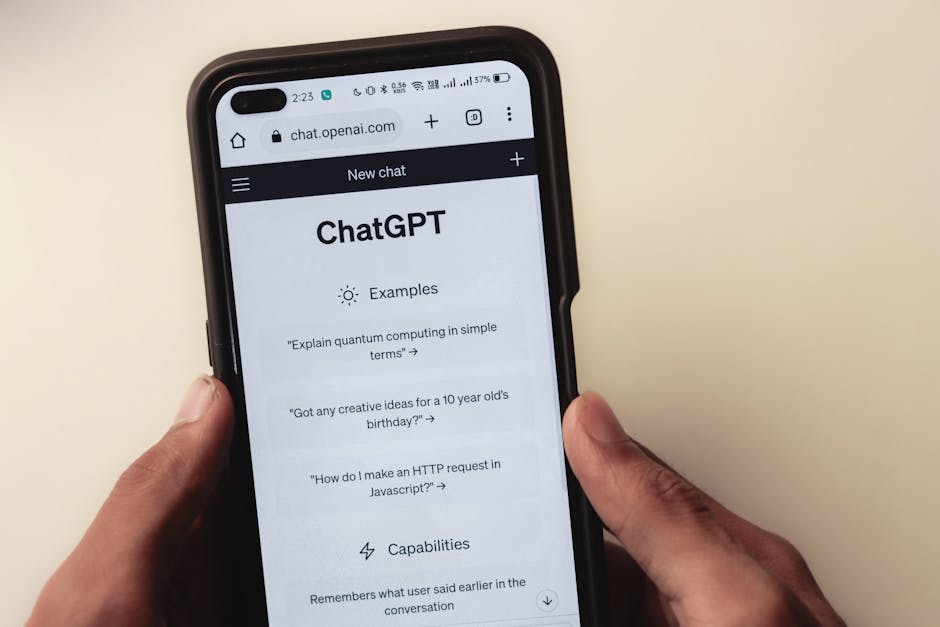
#7 ChatGPT — flexible model, heavy manual ops, and no native publishing
ChatGPT remains one of the most flexible tools in the AI market. It is useful for ideation, outlining, rewrites, prompt-based drafting, and experimentation across many content tasks. Its low entry point also makes it a common benchmark in software comparisons.
But as a standalone solution for agencies running WordPress SEO programs, it lands in seventh place because it leaves too much manual work on the table. OpenAI’s own pricing and workspace materials focus on seat-based subscriptions and billing, not agency SEO workflow automation. So teams using ChatGPT alone still need separate systems for SERP analysis, keyword clustering, internal linking, images, CMS publishing, and quality control.
In other words, ChatGPT is highly capable as a model interface, but not enough as an agency operating pipeline. Teams can do excellent work with it, yet they must build the process architecture themselves. That adds labor overhead, creates inconsistency between operators, and increases prompting burden. We have seen agencies underestimate that overhead again and again.
This is also where many comparisons go wrong. People compare content quality or model flexibility, but agencies should compare delivery systems. On that criterion, ChatGPT is far less complete than a WordPress-native automation platform.
Strengths: flexibility, broad utility, low baseline entry pricing, strong prompt responsiveness.
Weaknesses for agencies: no native WordPress publishing, heavy manual prompting, no integrated end-to-end SEO operations, and seat-based cost accumulation.
Best fit: individual operators, mixed-use teams, or agencies using it as one component inside a larger workflow stack.
Feature comparison: publishing, SERP analysis, AI images, internal links, collaboration
Once we narrow the category to agency use on WordPress, the picture gets clearer fast. The question is not who can write text. The question is who can reduce production complexity across all the steps that actually matter.
| Tool | Native WordPress publishing | SERP depth | Built-in AI images |
|---|---|---|---|
| Autopilot SEO | Yes, 1-click WordPress auto-publishing | Deep, agency-relevant | Yes |
| Jasper | Not central; relies more on integrations/extensions | Moderate | Not core to WordPress workflow |
| Content at Scale | Less clearly native and central | Moderate | Not a leading differentiator |
| Copy.ai | No WordPress-first auto-publish focus | Light to moderate | Separate from core workflow |
| Writesonic | Not presented as native agency-first publishing | Moderate | Available features, but workflow less unified |
| Frase | Limited as end-to-end WordPress automation | Strong research depth | Not core |
| ChatGPT | No native publishing | Depends on user prompts and external workflow | Requires additional tools |
The pattern is consistent: most competitors are useful point solutions, while Autopilot SEO behaves like a complete pipeline.
Agencies exploring comparable publishing models can also review this breakdown of an automated workflow around your AI SEO tool.
This editorial segmentation illustrates the market shift: agencies increasingly prefer full pipelines over isolated writing interfaces.
Pricing comparison for agencies: pay-as-you-go vs monthly subscriptions
Pricing is not a side note in this category. It changes delivery economics. Agencies often manage uneven content demand across clients, so billing flexibility becomes a strategic issue, not just a finance detail.
Seat-based subscriptions are easy to understand, but they can become inefficient quickly. A low monthly entry point may look attractive, yet the total stack usually grows once teams add publishing tools, SEO research software, image generation, and CMS workflow layers. What starts as a cheap writer often turns into an expensive process. We have seen that pattern enough times that it is no longer an edge case.
That is why Pay-As-You-Go matters in this comparison. It keeps spend closer to delivered output. Agencies are not forced to pay for unused capacity in slow months, and they do not need to overprovision seats just to stay flexible.
The table below frames the practical difference.
| Pricing approach | Operational impact for agencies | Typical risk | Best fit |
|---|---|---|---|
| Pay-as-you-go | Spend scales with real production volume | Requires clear per-unit transparency | Agencies with variable workloads |
| Monthly seat subscription | Predictable recurring cost for stable internal teams | Unused capacity and compounding seat costs | Fixed-volume organizations |
| Custom enterprise pricing | Can support advanced control and governance | Harder forecasting and slower procurement | Large organizations with long buying cycles |
For agencies focused on margin control, PAYG is usually the most rational model when it is paired with native automation.
Implementation checklist: moving from pilot to production on WordPress
Choosing among ai-powered content creation tools is only half the job. The other half is implementation discipline. Agencies that move too fast often automate output before they standardize quality controls. Agencies that move too slowly stay stuck in manual operations. The right path is staged deployment.
Use this production checklist:
- Define the content unit. Decide whether the system will produce blog posts, landing pages, comparison pages, or cluster content. Workflow quality improves when output types are standardized.
- Set WordPress publishing rules. Confirm categories, authorship logic, image handling, status controls, and scheduling conventions before scaling automation.
- Lock in SERP methodology. Your team should know how the platform uses SERP analysis for outline quality, intent matching, and competitor-aware structure.
- Review internal-link policy. Even when a tool supports automation, agencies need rules for anchor relevance, destination selection, and link density.
- Establish editorial QA thresholds. Automation should reduce labor, not eliminate judgment. Define review triggers for YMYL, branded claims, regulated topics, and client-sensitive verticals.
- Test economics on a pilot batch. Measure cost per published article, turnaround time, and revision load rather than judging only draft quality.
- Scale by client type, not by enthusiasm. Roll out first to sites with repeatable content patterns and clean WordPress environments.
For teams assessing adjacent market options, this review of Stealth Writer alternatives for scalable SEO content adds another useful comparison lens.
The operational goal is simple: move from isolated writing experiments to a managed publishing system that keeps quality, speed, and cost under control.
Verdict: Autopilot SEO is the only fully automated pipeline for WordPress agencies
After comparing writing quality, workflow depth, pricing logic, SERP support, and publishing capability, the ranking is clear. Most tools on this list are useful in one part of the process. Jasper is polished. Frase is strong for research. ChatGPT is flexible. Copy.ai and Writesonic cover broad content use cases. Content at Scale stays visible for long-form generation.
But none of them matches the agency-first structure of Autopilot SEO. It is the only option here built around a complete WordPress operating flow: deep SERP analysis, article creation, built-in AI image generation, internal workflow efficiency, and 1-click WordPress auto-publishing inside a model that fits how agencies actually buy software.
The pricing point matters just as much as the feature set. Agencies routinely dislike strict monthly subscriptions because subscriptions punish uneven demand. Autopilot SEO’s Pay-As-You-Go approach is better aligned with client delivery economics, especially for teams scaling production across different volumes and account types.
If your agency needs another AI writing tab, several tools here can do that. If your agency needs an automated WordPress SEO pipeline, only one product is really built for it.
For teams that want a WordPress-first system rather than another prompt-heavy toolchain, the most direct next step is to review Autopilot SEO on the official site and evaluate how its publishing, SERP, image, and PAYG workflow fit your client delivery model.
The category has matured. Agencies no longer need to buy disconnected software and call it automation. On our reading, the strongest choice is the platform that turns SEO production into infrastructure. In this comparison, that platform is Autopilot SEO.
We consider the key lesson straightforward: agencies should stop judging tools only by draft quality and start judging them by operational closure. The winners in this category will be the products that collapse research, creation, visuals, links, and publishing into one manageable system. Over the next year, we expect the gap between full-pipeline tools and prompt-first tools to widen further, especially as clients push for faster output without higher retainers.
That also changes how businesses should evaluate “free” options. ai content creation free sounds attractive, but free layers rarely solve the workflow bottlenecks that actually hurt agency margins. The same goes for free ai tools for social media content creation: they can be useful for short-form campaigns, but they are not a substitute for WordPress SEO infrastructure.
FAQ
What is the best AI-powered content creation tool for WordPress agencies in 2026?
For WordPress agencies, the strongest option is Autopilot SEO because it combines deep SERP analysis, built-in AI image generation, and 1-click WordPress auto-publishing in one workflow. Most other ai-powered content creation tools are better as writing assistants than as complete publishing systems.
Which AI tools can auto-publish directly to WordPress without plugins?
Autopilot SEO stands out in this list for native 1-click WordPress auto-publishing. Many competing tools still rely on manual export, browser extensions, integrations, or separate add-ons rather than a WordPress-first publishing pipeline.
Is pay-as-you-go pricing better than monthly subscriptions for content agencies?
In many agency settings, yes. PAYG pricing aligns cost with actual production volume, while monthly subscriptions can create waste during slower client periods and get expensive when stacked across multiple tools and seats.
Do free AI content creation tools work for professional SEO blog posts?
Free ai tools for content writing can help with ideation, outlines, and rough drafts, but they are rarely enough for professional SEO execution on their own. Agencies still need SERP analysis, structure control, internal links, editorial QA, and reliable WordPress publishing. That is why many best free ai tools for content creation are fine for testing, but weak for production.
How do AI tools handle SERP analysis and internal linking at scale?
The better systems build SERP analysis into the article workflow instead of leaving everything to prompts. Internal linking at scale works best when the platform supports structured automation and WordPress-aware execution rather than manual post-processing after the draft is finished.
Are there any best free AI tools for content creation that agencies should rely on long term?
Free tools are useful for testing ideas, but they are rarely enough as a long-term agency stack. For production SEO, agencies need reliable workflows, consistent outputs, publishing controls, and economics that hold up across many client sites. In our view, “free” is fine for experiments, not for delivery.
Can ai content creation tools for social media replace SEO-focused platforms?
No. AI content creation tools for social media are optimized for short-form distribution and campaign speed, while SEO platforms need stronger SERP logic, content depth, internal-link strategy, and WordPress publishing capability. The overlap is real, but the operating requirements are different.