
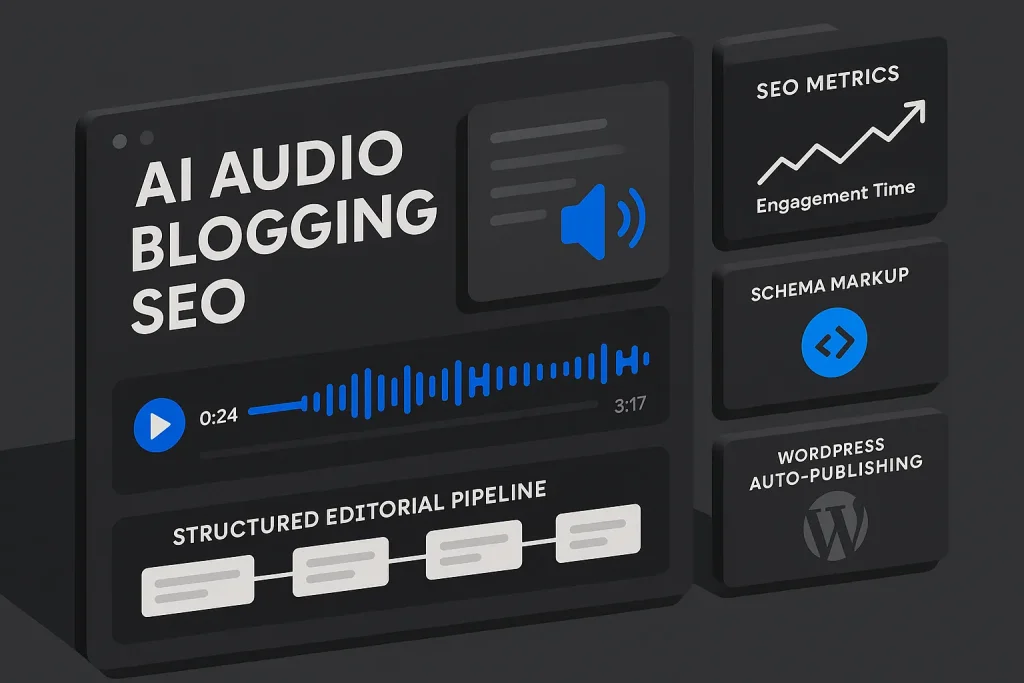
Audio is no longer a side format reserved for podcasts and media brands. For publishers competing on engagement, retention, and content efficiency, ai text to speech is a practical way to turn a static article into a multi-format asset that holds attention longer, serves more use cases, and makes a page feel more complete. A reader who will not commit to full-screen reading may still stay with the article if a clean inline player lets them listen while scrolling, working, or switching devices.
That matters because blog performance is now shaped by depth of use, not just click acquisition. A strong page needs readable structure, discoverable markup, accessible delivery, and a format mix that matches how people already consume information. Audio blogging sits right at that intersection. It extends article utility without forcing a separate content production system, and it gives SEO teams another engagement layer they can actually measure.
For B2B content operations, the value is especially clear. One source article can support search visibility, skimmer-friendly reading, spoken consumption, transcript accessibility, and distribution across owned channels. We do not think audio magically boosts rankings. The real gain is simpler and more useful: audio makes the page more usable, more inclusive, and more aligned with real media habits, which can improve engagement metrics, authority signals, and content ROI over time.
What Is Audio Blogging and Why It Matters in 2026
Audio blogging means publishing a written blog post with a playable spoken version on the same URL. At its best, this is not a separate podcast episode awkwardly attached to a page. It is a structured article experience where text, player, transcript, metadata, and schema work together. The page stays a search-first article, but gains another way to consume it.
In 2026, that matters because on-demand audio is already normal behavior. Edison Research’s 2025 Infinite Dial data reported that 55% of Americans age 12+ consume podcasts monthly, up from 47% in 2024, while 79% listen to online audio monthly. This is not niche behavior anymore. It is mainstream. When a publisher adds an audio player to a blog post, the article starts matching a familiar media habit instead of forcing users into a text-only workflow.
There is also a blunt attention-market reason behind the shift. Nielsen’s Q2 2025 audio report found that Americans spend 3 hours and 50 minutes per day with audio across platforms. Blogs do not need to become podcast networks to benefit from that. They just need to remove the friction between “I want this information” and “I do not want to read all of it right now.”
So we see audio blogging as a format bridge. It connects reading and listening, accessibility and productivity, traditional SEO publishing and more flexible delivery. On our view, that is especially valuable for informational pages aimed at people in motion, multitasking users, and younger digital-native audiences who already expect a play button in educational content.

The difference between a basic audio add-on and strategic audio blogging is implementation quality. A weak setup uploads a robotic file, hides it behind extra clicks, skips transcripts, and slows the page. A strong one uses realistic text to speech, places the player near the top, keeps the text visible, includes transcript support, and connects the audio asset to the page with structured data. That difference is not cosmetic. It decides whether the audio layer becomes a ranking support system or a UX liability.
These figures do not prove that every audio player lifts rankings. They do show that audio-enabled articles are competing inside a behavior pattern users already understand. That is an important distinction.
The year-over-year rise in podcast consumption supports the case for adding spoken versions to informational content instead of treating audio as an experimental extra.
How AI Text-to-Speech Increases Time-on-Page and Dwell Time
The SEO conversation around audio usually starts with time-on-page, but the more useful lens is session continuity. An inline player can extend the time users actively stay with an article because it supports attention in moments when silent reading would stop. Think commuting, tab-switching, visual fatigue, accessibility needs, or simply a long guide that is easier to absorb by ear.
In practical terms, ai text to speech helps a blog retain users who would otherwise bounce after scanning headings. Someone opens a 2,500-word guide, decides they do not want to read it immediately, then presses play and keeps engaging while scrolling the summary, checking examples, or listening in the background. The page has not just earned a click. It has earned continued use.
Google Analytics 4 defines average engagement time as total time a site or app is in focus divided by active users, as explained in the official GA4 engagement documentation. That matters more than many teams realize. If a visitor keeps the article page in focus while listening, the session can contribute to a measurable engagement outcome. This is one reason we strongly prefer in-page audio over forcing users to open a separate file or leave for another platform.
There is a nuance here. Audio does not increase engagement just by existing. It works when the implementation removes friction. A text to speech ai player near the intro, a clear duration label, a visible transcript, and chapter-like subheadings create a usable listening path. A buried widget, a synthetic voice that sounds brittle, or a slow-loading embed does the opposite.
The behavioral model is straightforward:
- User lands on an article from search.
- The article offers text plus an obvious audio option.
- The user starts listening instead of abandoning the page for later.
- Listening keeps the page active longer while the user scans sections or remains focused on the tab.
- The article becomes more useful for multitasking, mobile use, and lower-attention contexts.
This is why the strongest audio blogging pages often outperform text-only pages in qualitative usefulness before any ranking effect is visible. They fit more real-world scenarios. On our experience, that is often where the first gains show up.

For younger users, the fit is even stronger. Pew Research found that 54% of U.S. adults had listened to a podcast in the previous 12 months, with much higher adoption among ages 18 to 29 than among older groups. That does not mean every audience wants the same voice or pacing. It means pressing play on informational content is already familiar, especially among digitally native segments that many SaaS and B2B brands want to attract.
Another reason audio increases dwell potential is cognitive pacing. Dense B2B articles often carry process detail, technical terms, and layered examples. A good text to voice ai engine can slow the information flow into a more manageable stream, especially when paired with section headings and transcript anchors. Some readers simply retain more when they hear and see the content together. That does not replace editing. It amplifies the editorial structure already on the page.
| Reader scenario | Text-only outcome | Article with audio player | Likely engagement effect |
|---|---|---|---|
| Busy professional on desktop | Skims headings and postpones reading | Starts listening while handling parallel tasks | Longer active page focus |
| Mobile visitor | Leaves due to long reading effort | Consumes the post as spoken content | Lower abandonment risk |
| User with visual fatigue | Stops after intro | Switches to listening without leaving | More complete article consumption |
| International reader | Misreads pacing or emphasis | Uses spoken cadence to follow argument | Improved comprehension |
Audio expands the number of situations in which a user can stay with the page. That is why it can influence time-based engagement outcomes without changing the article’s core topic.
SEO Benefits: Accessibility, UX Signals, and Topical Authority
The SEO value of audio blogging comes from three practical gains: accessibility, stronger user experience, and broader evidence of topical completeness. None of this is a ranking loophole. It is infrastructure work that makes the page more useful and easier to understand.
Accessibility as a search-supporting quality layer
Audio makes a written post easier to consume for people with visual strain, reading difficulties, attention constraints, or context-based limitations such as commuting and hands-busy tasks. On its own, audio is not enough. The page still needs text. According to W3C accessibility guidance, prerecorded audio-only content should include a transcript to satisfy relevant WCAG expectations. For blog publishers, that is actually an operational advantage because the transcript is already the article.
This combination also protects indexability. Search engines can crawl the full text, users can read or listen, and the page serves both discoverability and accessibility without fragmenting the content. We consider that one of the cleanest SEO arguments for article audio.
UX signals and perceived quality
Useful UX features tend to compound. An article with concise formatting, internal navigation, strong subheadings, and an optional player signals editorial investment. That can shape how users assess authority, whether they share the content, and whether they explore more pages on the site. In that sense, audio supports site authority indirectly through usefulness and finish quality.
There is also a content retention effect. Informational pages often lose readers in the middle sections where explanations get denser. A smooth ai voice generator or ai voice over generator can keep users moving through those sections, especially when the voice sounds natural enough to reduce fatigue. This is where realistic text to speech matters more than feature checklists. The goal is not to prove the site uses AI. The goal is to make the article easier to consume.
Teams that already optimize article readability can extend the same logic into audio. The same rules apply: pacing, clarity, sentence length, heading hierarchy, and transitions. If the source text is messy, no ai text to speech software will turn it into a premium listening experience. We have seen this repeatedly in AI-heavy content workflows.

Topical authority and content completeness
Topical authority is usually built through consistent coverage, semantic depth, internal linking, and content quality. Audio does not replace those fundamentals. It strengthens them by making a strong article more complete. A page that includes a written guide, a spoken version, structured metadata, and a transcript becomes a more mature content object than a plain wall of text.
That maturity matters for B2B publishers in crowded niches. It signals that the site is not publishing for indexing volume alone, but is engineering content for different usage modes. For audiences evaluating expertise, that matters. For editorial teams, it becomes a repeatable advantage.
Sites that publish educational content, product explainers, research summaries, or operational guides benefit most because these formats already carry high information density. Audio turns that density into a more flexible asset without forcing a separate editorial branch.
A related benefit is internal content economics. When one article can support reading, listening, snippet extraction, and repurposing, the page becomes more valuable per topic invested. That does not change Google’s ranking systems directly, but it does improve the quality and consistency of the publishing program. On our view, that is where long-term SEO advantages usually come from.
For teams working on AI-assisted production, it is worth pairing audio with editorial cleanup. The logic is similar to the process described in rewriting AI content for stronger engagement and rankings: the better the source copy, the better the audio layer performs.
Schema and Discoverability: AudioObject, Podcast Feeds, and Sitemaps
Discoverability improves when search systems can understand what a page contains. For audio blogging, that means connecting the article, the audio asset, and the relevant metadata in a machine-readable way instead of relying only on visible page elements.
Article structured data as the base layer
Google’s Article structured data documentation says this markup helps Google better understand article pages and can improve how title, image, and date details appear across Search, Google News, and other surfaces. For audio-enabled blog posts, Article schema is still the foundation because the page is still primarily an article URL.
So publishers should not think in terms of replacing article markup with audio markup. The right model is layering. Keep Article structured data for the core page, then enrich it with audio-specific semantics where relevant.
AudioObject for machine-readable audio relationships
Schema.org’s AudioObject specification gives publishers a structured way to describe the audio asset tied to a page. Useful properties include contentUrl, duration, encodingFormat, embedUrl, and transcript. That creates a clear semantic bridge between the article content and the playable media.
Schema alone does not create rankings, but it reduces ambiguity. If a crawler can see that the page contains a proper article plus an associated audio object, the site is better positioned for future discoverability experiments and richer understanding. Schema.org also shows AudioObject is already used by a meaningful range of domains, which tells us this is established markup, not speculative syntax.
For implementation discipline, the safest path is simple:
- Use Article schema on the page.
- Expose the audio file URL directly where possible.
- Reference transcript information clearly.
- Ensure critical content is present in HTML and not hidden behind click-triggered rendering.
This last point matters operationally. Google’s lazy-loading guidance says content should load when visible and should not depend on user actions such as clicks. If transcript text, player metadata, or source URLs only appear after interaction, search systems may miss important parts of the page experience. We see this as a common implementation mistake, not a minor technical detail.
The broader the audience’s familiarity with audio interfaces, the more reasonable it becomes to design article pages around optional listening.
Speakable, podcast feeds, and realistic expectations
Google’s speakable structured data documentation explains that the property identifies sections of a page suited for text-to-speech playback in supported news use cases. This should not be misunderstood as a universal ranking feature for every blog. Its practical value is strategic awareness: Google has already defined a formal concept for machine-selected spoken sections, which reinforces the idea that structured spoken content is part of the search ecosystem.
Podcast feeds can also help if the site wants to syndicate spoken article versions to podcast platforms, but that is a separate distribution strategy. For SEO on the main blog URL, the priority is clean on-page integration, accessible transcript support, and crawlable metadata. A feed can extend reach. It does not replace solid page architecture.
If the site publishes large volumes of audio-enabled articles, XML sitemaps remain useful for standard page discovery, while media asset management should ensure stable file hosting, consistent naming, and long-lived URLs. Discoverability starts with reliable publishing infrastructure. It is less glamorous than tool demos, but usually more important.
Choosing an AI Text-to-Speech Engine and Voice
Engine selection is where many teams get distracted by demo novelty. The best choice is not the voice that sounds most impressive in isolation. It is the engine that produces consistent, listenable output across dozens or hundreds of articles with minimal manual repair.
Whether a team is evaluating a free ai voice generator, a best ai voice generator, or enterprise ai voiceover software, the criteria should stay operational:
- Natural pacing on long-form articles.
- Pronunciation control for product names, acronyms, and industry terms.
- Support for paragraph and sentence-level pause tuning.
- Stable export formats and hosting compatibility.
- Licensing clarity for commercial blog publishing.
- API or workflow compatibility with CMS and automation tools.
These filters matter more than whether a tool markets itself as a text to speech ai generator or ai text to voice generator free. Vendor language changes. The production requirement does not: turn a finalized article into reliable spoken media without creating a new editing bottleneck.

What “natural” actually means for blogs
For blog use, naturalness is less about theatrical expression and more about low-friction intelligibility. A good voice should handle explanatory sentences, parenthetical phrases, lists, and subheadings without sounding brittle or overacted. B2B content usually benefits from a restrained editorial voice, not high-emotion delivery.
That is why some best free ai voice generator demos look better in a 20-second sample than in real publishing conditions. A voice can sound polished in one paragraph and fall apart on long-form syntax, abbreviations, or SEO terminology. Testing should use a real article from your site, not vendor showcase copy. On our practice, this single step saves a lot of bad tool decisions.
Evaluation checklist for TTS pilots
When comparing a generate voice workflow across providers, use the same article and score output against these points:
Pronunciation accuracy, heading transitions, number handling, acronym handling, pacing consistency, acceptable file size, export speed, and editorial correction time. If the output needs too much manual listening and repair, the engine is not suitable for scaled publishing even if the sample voice sounds premium.
Teams that want an ai voice generator text to speech stack for large content libraries should also test multilingual expansion, voice consistency across categories, and the ability to standardize brand voice at scale. One of the main advantages of AI TTS is repeatability. That value disappears if every post needs custom direction.
It is also worth testing niche vendor comparisons directly. For example, if your shortlist includes murf ai text to speech alongside another platform, compare them on a real article with acronyms, product names, and long paragraphs. Demo pages rarely reveal the friction that shows up in production.
| Evaluation area | What to verify | Why it matters for SEO blogs |
|---|---|---|
| Voice naturalness | Long-form clarity, not demo charisma | Supports retention on long informational pages |
| Pronunciation control | Custom terms, acronyms, product names | Reduces trust loss in technical articles |
| Workflow fit | API, export, CMS compatibility | Prevents manual overhead at scale |
| Licensing | Commercial usage and redistribution rights | Avoids compliance risk in monetized content |
The right engine is the one that survives repeated production use with low correction cost and stable editorial quality. That is a less exciting answer than “best ai voice generator,” but it is the one that holds up in real workflows.
Production Workflow: From Blog Draft to Audio Player
Adding audio works when it is built into the content workflow, not bolted on later as a one-off media task. The ideal production line starts with a search-optimized article and then converts the final approved draft into spoken media with as few manual steps as possible.
A practical workflow looks like this:
- Finalize the article text. Do not generate audio from an unedited draft. TTS exposes awkward syntax and repetitive phrasing immediately.
- Clean for listenability. Shorten overloaded sentences, clarify transitions, and expand acronyms on first use.
- Generate the audio file. Use an engine that supports consistent export settings and brand voice.
- Review critical pronunciations. Check names, tools, product categories, and numbers.
- Embed the player on the article URL. Place it high enough to be discovered quickly, usually after the intro.
- Keep the transcript visible. The article itself normally serves this role.
- Add metadata and schema. Connect the article and audio asset in structured form.
- Track listening events. Measure starts, quartiles, completions, and downstream page actions.
For high-volume teams, the biggest gain comes from removing repeated handoffs. If writers, editors, SEO specialists, and CMS managers each touch the audio step separately, the process gets expensive fast. This is where automation-oriented ecosystems matter. A well-designed stack can move from semantic planning to article generation, editorial cleanup, media enrichment, and WordPress publication as one pipeline instead of a string of disconnected tasks.
That broader workflow view is why teams exploring audio should also examine how their core publishing system works. If the article source is unstable, the audio layer inherits that instability. A useful reference point is AI assistant for SEO content ops and WordPress auto-publishing, where the real gain comes from reducing friction across the full content lifecycle, not just one tool step.
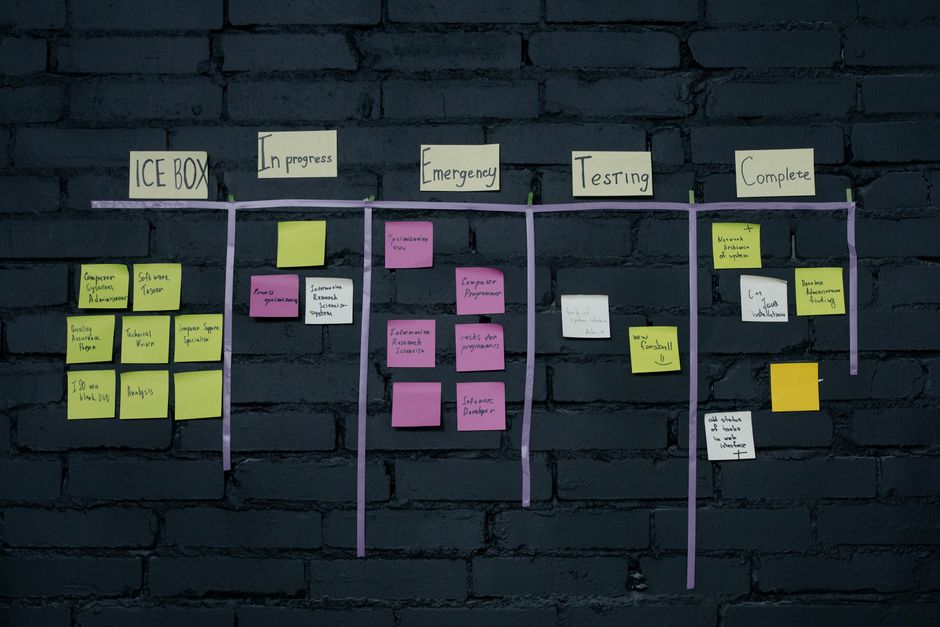
A mature workflow also distinguishes between article types. Not every page needs audio on day one. The highest-return candidates are long-form guides, educational posts, evergreen explainers, and high-traffic posts with strong informational intent. Short updates, landing pages, or thin announcements usually offer less payoff. We think this prioritization matters more than teams expect.
If budget is tight, some publishers start with ai voice text to speech on a small cluster of evergreen pages, or test an ai voice text to speech free workflow before moving into a paid stack. That is reasonable, as long as the pilot is measured against editorial quality and not just cost per audio file.
WordPress Implementation: Players, Embeds, and Performance
WordPress makes audio implementation accessible, but easy implementation is not the same as good implementation. The goal is to add an audio layer without slowing the page, breaking crawlability, or creating an intrusive experience.
Player placement and page architecture
The player should be easy to spot, but it should not dominate the page. In most cases, placing it near the top of the article after the opening context works well. That catches users before they bounce while still letting the text lead the page. The transcript remains the article body itself, which helps avoid duplicate asset pages and preserves one canonical content destination.
Embedding matters too. Native HTML5 audio is often enough for simple use cases. More advanced players may offer analytics, branding control, or chapter markers, but every extra script has to justify its performance cost. A light player with stable rendering is usually better than a feature-heavy widget that delays content paint. On our view, this is one of the easiest places to overengineer.
Performance rules that protect SEO
Audio should not degrade the experience that made the page rank in the first place. That means:
- Compress and serve audio files efficiently.
- Do not block main content rendering with player scripts.
- Load visible content in HTML, not only after user clicks.
- Avoid oversized third-party embeds where a direct player works.
- Test mobile behavior and cumulative layout shifts.
WordPress sites with large media libraries should also pay attention to hosting strategy. The audio file can live on the main domain, a stable media path, or a reliable CDN, but the URL structure should remain durable. Broken media references undermine trust and waste indexing opportunities.
Teams comparing tools often focus on whether a provider offers ai text to speech free or ai voice text to speech free access tiers. For WordPress implementation, the more important question is how the output behaves on the page. A cheaper engine that exports awkwardly or forces heavy embeds can cost more in UX and maintenance than a better-structured paid option.
There is also a strategic reason to avoid tool sprawl. If the site already uses AI for outlining, drafting, optimization, and publication, splitting audio into a disconnected manual tool can recreate the inefficiency automation is supposed to remove. That is one reason many teams start to see why manual AI writing tools are becoming obsolete once content operations begin to scale.
Audio behavior is now habitual enough that a well-implemented player can support article utility without asking users to learn a new format.
Tracking Impact: GA4 Events, Completion Rate, and A/B Tests
Audio should be measured as a product feature, not assumed to be an SEO win. The right framework combines GA4 engagement metrics with player-specific events and page-level comparisons.
Core metrics to track
At minimum, publishers should instrument:
- Player impressions
- Play starts
- 25%, 50%, 75%, and 100% completion milestones
- Average engagement time on audio-enabled articles
- Scroll depth and internal click-through after playback starts
- Return visits to audio-enabled content clusters
These metrics help separate novelty from actual utility. A high play-start rate with poor completion may point to curiosity but weak voice quality or irrelevant placement. A lower start rate with strong completion may point to a more qualified listening audience. Both scenarios are actionable.
For A/B testing, compare similar articles rather than random pages. Match by topic type, length, traffic source, and search intent. Then review changes in average engagement time, engaged sessions per user, and internal navigation patterns. Audio will not improve every article equally. On our experience, it tends to work best where the content is long, educational, and structurally clear.
Qualitative review matters too. Read comments, support messages, or feedback from sales and customer success teams. If prospects mention listening to articles during work, the feature is creating cross-functional value beyond SEO dashboards. That is often a stronger business signal than a small metric bump.

One useful refinement is segmentation by device and article type. Mobile users may show stronger play-start behavior, while desktop users may generate longer engaged sessions. Evergreen explainers may outperform newsy posts. These patterns help decide where to deploy audio first.
Audio data should also feed editorial iteration. If a certain voice, intro style, or player position performs better, standardize it. Content operations improve when they use listening behavior as feedback instead of treating audio as fixed media. We think this loop is where the real compounding value appears.
Governance: Brand Voice, Compliance, and Licensing
Scaled audio publishing introduces governance issues that many blogs overlook at the pilot stage. Voice output becomes part of the brand experience, so it needs standards just like visual design or editorial style.
Brand voice consistency
Choose a limited set of voices by content type. For example, one primary editorial voice for educational posts and another for product explainers. Avoid random voice changes from post to post. Inconsistent delivery weakens recognition and can make the site feel assembled rather than managed.
Listening standards should define pacing range, preferred pronunciation rules, treatment of abbreviations, and whether headlines are read verbatim or softened for speech flow. This matters much more once dozens of articles are in production. We have seen teams ignore this early and then spend months cleaning up inconsistency.
Compliance and rights
Licensing is not an afterthought. Teams using a free ai voice generator or best free ai voice generator for commercial publishing need explicit rights for monetized website use, redistribution, and potential cross-channel syndication. Some tools are free for testing but restricted for business deployment.
There is also a disclosure question. In some brand environments, explicitly noting that the audio version is AI-generated can be appropriate, especially if the audience expects transparency around synthetic media. This is more a trust and policy decision than a ranking issue, but it belongs in governance planning.
Finally, editorial review should cover risk areas such as legal claims, medical or financial nuance, and pronunciation of regulated terms. A misread word in a casual blog post is annoying. In a high-stakes sector, it can alter meaning. That is why governance around ai voiceover software should be treated as publishing policy, not just tooling.
Pitfalls to Avoid: Autoplay, Latency, and Duplicate Content
The most common failure in audio blogging is treating the player as a decorative gadget rather than a content component. A few mistakes can erase the UX benefits very quickly.
Autoplay
Do not autoplay article audio aggressively. W3C notes that autoplaying audio for more than three seconds requires pause, stop, or volume control mechanisms, and beyond compliance it often creates immediate friction. Users opening a search result rarely want unsolicited sound. Autoplay increases abandonment risk and can damage trust faster than it increases engagement.
Latency and heavy embeds
If the player delays content rendering, shifts layout, or requires several external calls before becoming usable, the page pays a performance tax. Audio is an enhancement. It should not degrade first-content usefulness. Test under mobile network conditions, not only on fast desktop connections.
Duplicate content anxiety
Publishing article text and an audio version on the same page is not a duplicate-content problem by default. The article remains the canonical content, and the spoken version is another format of the same material. Google has long clarified that duplicate content is generally not grounds for action unless deceptive or manipulative. For article-to-audio workflows, the important thing is to avoid splitting the experience across competing thin URLs without a reason.
Another mistake is gating transcripts or metadata behind click actions. Search systems may not interact with those elements, which weakens crawlability and context. Keep essential content available in the page source or rendered accessibly when visible.
If your broader workflow still depends on disconnected tools for drafting, cleanup, and publishing, even good audio can feel bolted on. The tradeoff between isolated components and integrated systems resembles the workflow discussion in AI paragraph writer vs long-form AI in a WordPress workflow: production quality depends as much on orchestration as on generation.
Soft CTA: One-Click Article-to-Audio with Autopilot SEO
For teams already investing in AI-assisted content, the highest ROI usually comes from reducing the number of manual transitions between research, drafting, optimization, publishing, and media enhancement. Adding blog audio works best when it is part of that broader operational system rather than a separate experiment managed in spreadsheets and browser tabs.
That is where SEO Autopilot becomes relevant. The platform is designed around end-to-end SEO content automation: semantic planning, article structure, text generation, media support, internal optimization, and WordPress publishing. In a workflow like this, article-to-audio is not just another plugin layer. It becomes a logical extension of a content pipeline built for scale, consistency, and lower production friction.
For agencies, publishers, and B2B teams managing large content calendars, an integrated system is often more valuable than another standalone ai voice generator free or isolated TTS utility. The operational question is not only how to create voice files. It is how to move from topic to published multi-format article with fewer manual bottlenecks and stronger quality control.
We believe the practical takeaway is simple: audio blogging works best when it is treated as part of content infrastructure, not as a novelty feature. The strongest results usually come from three things together: clean editorial copy, reliable ai text to speech output, and disciplined implementation on the article URL. Businesses that skip any one of those pieces often end up with a player that exists, but does not really help.
Looking ahead, we expect more publishers to test article audio as a standard UX layer, especially on evergreen and high-intent content. Search engines may not reward the format directly, but user expectations are clearly moving toward flexible consumption. Our forecast is pragmatic: the teams that operationalize audio early will not win because they used AI first, but because they made their content easier to consume at scale.
FAQ
Does adding text-to-speech to blog posts help SEO?
Yes, indirectly. Text-to-speech can improve usability, accessibility, and engagement when the article remains fully readable, the audio is embedded cleanly, and the page tracks meaningful listening behavior. It is not a guaranteed ranking lever on its own, but ai text to speech can make long-form content more useful and measurable.
How do I add an audio player to WordPress without slowing pages?
Use a lightweight player, compress audio files, avoid script-heavy embeds, and keep the article text fully available in HTML. Place the player near the top of the post, but do not let it block core content rendering. In practice, the best setup protects page speed while adding a clear listening option.
What metrics prove that audio increases dwell time?
Track play starts, completion milestones, average engagement time, engaged sessions, scroll depth, and internal clicks after playback begins. In GA4, compare audio-enabled pages against similar non-audio pages to see whether users stay focused longer and move further through the content journey.
Which AI text-to-speech sounds most natural for blogs?
The best engine is the one that handles long-form articles consistently with accurate pacing, pronunciation, and minimal manual correction. A short demo is not enough; test real blog posts with headings, acronyms, and technical terms. For editorial publishing, realistic text to speech matters more than flashy sample voices.
Should I autoplay audio on articles?
No, in most cases autoplay is a mistake. It creates accessibility and UX risks, can irritate search visitors, and often increases exits instead of engagement. Let users choose when to start the audio, and provide clear controls for pause, volume, and progress.