
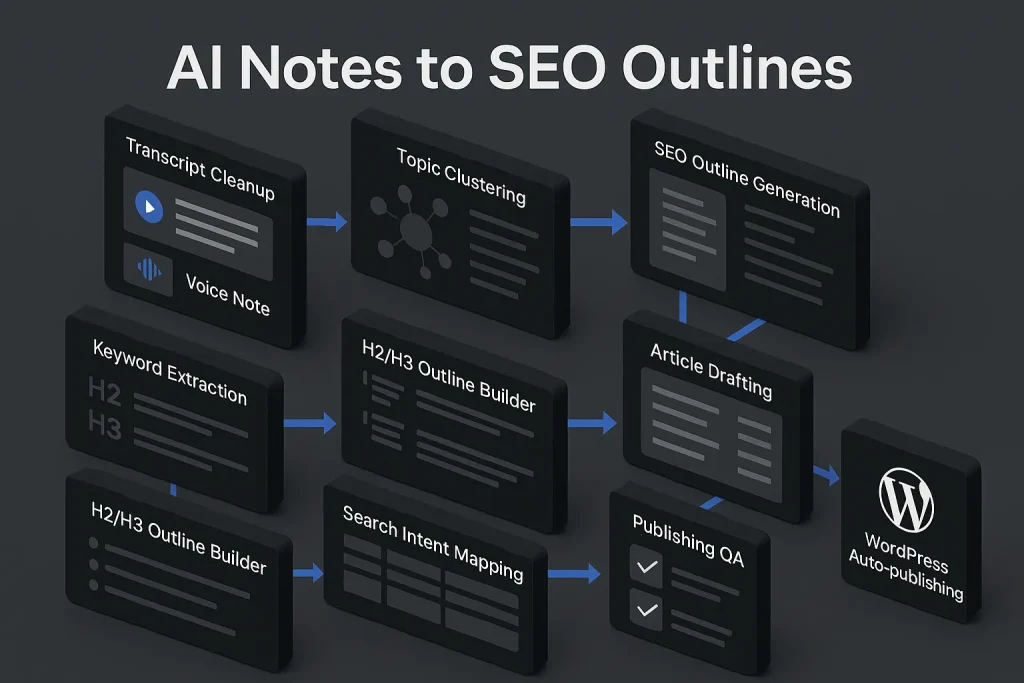
Content teams lose ranking opportunities long before drafting starts. The bottleneck is usually upstream: scattered ai notes, half-finished meeting transcripts, raw voice memos, fragmented call recordings, and action items buried in Slack or email. When those inputs are cleaned up and routed into an SEO workflow, they stop being disposable meeting residue and become a real content asset that can produce briefs, outlines, articles, internal links, and publication-ready posts at scale.
The business case is getting harder to ignore. Pew Research reported in 2025 that 21% of U.S. workers say at least some of their work is done with AI, up from 16% a year earlier. At the same time, 65% still say they do not use AI much or at all in their job. We think that gap says a lot: adoption is rising, but most teams still have not built a repeatable way to turn ai notes into structured SEO output instead of isolated summaries.

Why AI notes are the fastest bridge from meetings to content
Most editorial teams already generate more source material than they publish. Sales calls reveal objections. Customer success meetings surface use cases. Product syncs expose roadmap priorities. Strategy meetings sharpen positioning. Webinar prep calls produce examples and terminology that often match the language of the market. The problem is not a lack of ideas. It is that raw conversational material is messy, repetitive, and difficult to reuse without a system.
An ai notetaker shortens the distance between conversation and content by turning spoken inputs into text you can actually work with. That alone does not create SEO value, but it removes the first manual bottleneck: transcription, recap, and rough segmentation. Once the text exists in a usable format, the team can extract entities, spot recurring phrases, detect customer language, group problems into themes, and map those themes to search intent.
This matters in plain time terms. Microsoft WorkLab documented that employees are interrupted every 2 minutes during core work hours, or about 275 times per day. In that kind of environment, post-meeting synthesis gets expensive fast. AI meeting notes cut the review burden because the team no longer has to replay a full call just to find three strategic insights and one quote worth using.
The next signal is strategic, not just operational. Microsoft’s 2025 Work Trend Index executive summary says 82% of leaders expect to use digital labor to expand workforce capacity in the next 12 to 18 months. For SEO and content teams, digital labor is not just drafting. It also covers note capture, topic extraction, outline generation, and publishing workflows. On our view, the fastest bridge from meetings to content is not “AI writes the article.” It is “AI structures the source material so humans can scale decisions.”
These numbers show a market in transition: adoption is growing, interruption costs are high, and research-heavy content work fits this category unusually well.
Inputs to feed: transcripts, voice memos, call recordings
The best workflows start by defining acceptable inputs. In practice, four input classes matter most: live meeting transcripts, uploaded call recordings, quick voice memos, and imported text notes from PDFs or docs. Each source comes with a different noise profile, so each should be handled a little differently.
Meeting transcripts are usually the highest-value input because they preserve multi-speaker context. Product, sales, and customer-facing meetings often generate objections, feature comparisons, user language, implementation blockers, and examples that later become H2 sections, FAQ items, or proof points. An ai meeting summary on its own is rarely enough; the transcript itself is often more useful for SEO because it keeps vocabulary frequency and nuance intact.
Voice memos are efficient when marketers, founders, or consultants think faster out loud than on the keyboard. A raw memo may include unfinished thoughts. That is still useful. We have seen it capture original positioning language earlier than any formal brief. An ai notes generator can turn those memos into directional topics, but results improve when the memo includes a simple frame: audience, problem, ranking angle, and evidence.
Recorded webinars, discovery calls, podcast episodes, and demo walkthroughs can also become ai notes from video. These longer assets work especially well for pillar content because they contain repeated themes and richer examples. Google’s note-generation features show how mainstream this category has become: Google Meet documentation states that “Take notes for me” is recommended for meetings from 15 minutes up to 8 hours. That tells us vendors now treat note generation as suitable for sustained, long-form conversation, not just short calls.
Audio size and format matter too when you build an ingestion pipeline. OpenAI’s speech-to-text documentation notes a current 25 MB upload limit and support for file types including mp3, mp4, m4a, wav, and webm. This is not a minor technical footnote. It affects how content teams handle raw interviews, founder voice notes, and customer call excerpts. If the team ignores file limits and segmentation rules, the pipeline breaks before any SEO work begins.

| Input type | What it captures well | Main SEO use | Typical cleanup issue |
|---|---|---|---|
| Meeting transcript | Real customer language, objections, multi-speaker nuance | Outlines, FAQs, problem-solution framing | Speaker confusion and repetition |
| Voice memo | Fast idea capture and original positioning | Angle development and draft seeding | Fragmented logic and missing context |
| Call recording or webinar | Long-form examples, explanations, repeated patterns | Pillar pages and thought-leadership articles | Length, filler, and topic drift |
| PDF or written notes | Prepared language and structured summaries | Entity extraction and supporting facts | Formatting inconsistency and lost hierarchy |
The practical takeaway is simple: do not force every source into the same template too early. Accept diverse inputs first. Normalize them second.
Clean and normalize raw notes (speakers, topics, action items)
Raw note quality shapes downstream content quality. If a transcript mixes speakers, keeps timestamp clutter, and repeats the same exchange three times, the AI layer will amplify the mess instead of clarifying it. That is why normalization is a production step, not cosmetic cleanup.
A useful normalization model includes six fields: source type, date, participants, primary topic, supporting subtopics, and action items. Beyond that, add optional fields for direct quotes, objections, product mentions, competitor mentions, and content-worthy examples. This is the point where ai notetaking stops being a convenience feature and starts becoming a searchable editorial database.
Speaker cleanup matters because different speakers usually carry different kinds of value. A founder may provide positioning. A marketer may define audience and acquisition goals. A customer-facing lead may reveal market language. When all speakers are merged into one block, the article loses viewpoint. If the transcript supports speaker tagging, keep it. If not, reconstruct likely speaker shifts during cleanup. On our experience, this step is boring but high leverage.
Topic segmentation matters just as much. Many ai meeting notes tools collapse entire meetings into one summary paragraph. That is fine for recap. It is weak for SEO production. The better move is to split the transcript into topic units such as problem definition, market context, product explanation, examples, implementation concerns, and objections. Each unit can later map to an article section.
Action-item extraction is more useful than it looks. Meetings often end with lines like “we should publish a guide on this,” “customers keep asking for the comparison,” or “this should be a checklist.” Those are content-intent signals. An ai notes app that captures them cleanly gives the editorial team an immediate backlog of asset types, not just topics.

Extract entities, topics, and search keywords from notes
Once notes are normalized, the next task is not drafting. It is extraction. The team should identify entities, repeated phrases, product capabilities, pain points, outcomes, comparisons, and audience terms. This is where ai notes begin to create a bridge into keyword research.
Entity extraction should be broader than classic SEO keywords. Capture product names, integrations, workflow steps, job roles, content assets, metrics language, and recurring verbs. In B2B content, these often matter more than a single high-volume head term because they shape topical authority and support long-tail relevance.
Search keyword extraction should be split into at least four groups: explicit keywords said in the meeting, customer-problem phrases, feature-to-benefit phrases, and derivative search queries. For example, a transcript may contain “meeting recap,” “sales call notes,” “content brief from webinar,” or “publish to WordPress.” Those are not equal. Some point to product function, others to workflow intent, and others to content format. We consider this one of the most common places where teams flatten good source material into generic output.
Among workers who use AI chatbots in their jobs, Pew found that 57% use them for research or finding information on a specific topic. That maps directly to this step. The value of ai notes is not just summarization; it is faster research extraction from material the company already owns.
The extraction stage should also identify “quoteable lines” and “rankable phrases.” Quoteable lines help originality and E-E-A-T. Rankable phrases help H2 labels, FAQ questions, and metadata candidates. The overlap between the two is usually where the strongest content appears.
Turn insights into an SEO outline (H2/H3, questions, angles)
An outline is where conversational chaos becomes editorial structure. The goal is not to turn the meeting into article-shaped meeting minutes. The goal is to reorganize the conversation around search demand, reader intent, and topic completeness.
The strongest outline process starts by choosing one dominant angle. A single transcript can support several content directions: a how-to post, a comparison page, a checklist, a strategy article, or a product-led workflow guide. Trying to preserve all of them at once usually creates bloated drafts. Pick the primary angle first. Save the rest for later assets.
H2 sections should express search-relevant subproblems, not meeting chronology. If the meeting moved through “tool problems, customer feedback, roadmap, pricing, implementation,” that does not mean the article should follow the same order. It should sequence topics for reader utility: why the workflow matters, what inputs are needed, how to structure them, how to optimize the result, and how to publish it.
H3 sections should carry the operational detail that makes the draft credible. Examples include “how to split one transcript into multiple content assets,” “how to separate keyword language from internal jargon,” or “how to preserve quotes without bloating the draft.” This is where an ai notes generator is valuable only if it supports structure, not just summarization.
A practical content template for this transformation usually includes these layers:
- Source summary: one-paragraph description of what the raw notes cover.
- Audience and intent: who the article serves and what action or understanding it should produce.
- Core keyword cluster: focus keyword plus supporting phrases from the source material.
- Angle statement: the editorial position that will shape the article.
- H2/H3 outline: organized by reader logic rather than transcript order.
- Evidence bank: quotes, examples, internal references, and approved claims.

Teams that skip this layer usually get one of two outcomes: a summary that reads like ai meeting minutes, or a generic AI draft that no longer reflects the original source material. Neither performs especially well.
Map search intent and prioritize keywords
Keyword prioritization should happen after the content logic is clear, not before. Once the outline exists, the team can map each section to a search-intent type: informational, commercial investigation, navigational support, or transactional adjacency. That prevents a common failure mode where a transcript-derived article tries to rank for a broad informational term while reading like an internal recap.
For this topic, the focus keyword ai notes is broad and flexible. It can support top-of-funnel educational content, tool-comparison pages, workflow guides, and product-led articles. Secondary terms such as ai notetaking, ai meeting notes, ai meeting summary, ai notes app, ai notes generator, ai to take notes, ai to take meeting minutes, ai notes from video, and ai notes from pdf can be assigned to different sections based on fit.
Not every keyword should appear in exact-match form. Some should remain close variants to preserve readability. In B2B SEO, the right balance is precision without stuffing. Exact-match use should be reserved for search concepts that do not damage tone. That also applies when teams compare notetaking ai workflows with a specific ai notetaker stack.
Intent mapping also protects the article from tool-led drift. Many note workflows begin with software and end with software, but the searcher often wants a repeatable process. So the article should solve the workflow first, then place product choices inside that workflow. This matters even more when discussing an ai notes taker free option or a free ai notes generator, because the searcher may still be exploring rather than buying.
| Keyword group | Typical intent | Best article role |
|---|---|---|
| ai notes, ai notetaking, notetaking ai | Broad informational or mixed | Intro framing and strategic sections |
| ai meeting notes, ai meeting summary, ai meeting minutes | Workflow informational | Input handling and cleanup sections |
| ai notes app, ai notetaker, ai notes taker | Commercial investigation | Tool selection and workflow comparison |
| ai notes from video, ai notes from pdf | Specific task intent | Input examples and pipeline constraints |
The outline should then be reviewed section by section so each major keyword maps to a distinct informational purpose instead of acting as filler.
Draft the article with AI, grounded in your notes
The most effective drafting prompt is not “write an article from this transcript.” That usually produces generic compression. A better prompt defines audience, search intent, outline, approved terminology, prohibited claims, key quotes, and required structural outcomes. In other words, it treats the transcript as source material inside an editorial system.
This is where many teams misuse an ai notetaker. They expect it to become an autonomous content engine. In reality, the system needs a bridge layer that converts notes into constraints and priorities for drafting. That bridge should specify which insights are central, which are supporting, and which should be ignored.
A grounded draft workflow typically looks like this in sequence:
- Ingest transcript or voice memo and create a cleaned source file.
- Extract entities, search terms, objections, examples, and quotes.
- Select the article angle and map intent.
- Generate an H2/H3 outline from the extracted themes.
- Draft section by section using the outline and source evidence.
- Run a second pass to improve readability, transitions, and precision.
- Add internal links, metadata, publishing checks, and CMS formatting.
For teams producing multiple content pieces per week, the drafting layer should also separate “article voice” from “source voice.” Raw notes can be blunt, repetitive, or full of shorthand. The final draft should preserve the intelligence of the source without preserving its mess. This is where guidance from an human AI content that actually converts visitors becomes useful: source-driven structure improves originality, but conversion quality still depends on editorial shaping.
If the workflow includes product pages, founder-led thought leadership, or technical explainers, it is also worth adding a research-enrichment pass before final drafting. A related process is described in this guide to an AI reader for content sourcing and research at SEO scale, where source material is expanded carefully instead of replaced by generic prose.

Add visuals, data, and quotes without derailing SEO
Source-derived content often has an advantage over generic AI drafts: it already contains examples and phrasing that sound real. The challenge is adding supporting visuals, structured data, and quotes without turning the article into a slide deck or an internal memo.
Use visuals to clarify workflow, not to decorate. In this topic, useful visuals include pipeline diagrams, transcript-to-outline flows, editorial QA sequences, or CMS publishing steps. Use quotes sparingly and only when they add specificity the surrounding text cannot. Meeting-derived quotes should be cleaned for readability and approved if they identify a person or client context.
Data should support the process argument. For example, vendor documentation shows that note-generation systems are expanding in scope. Microsoft Support for Teams audio recaps notes synthesis across transcripts from up to 8 meetings in a selected period, with default transcript retention of 120 days and generated audio recap availability of 60 days. Those details matter operationally: content teams can move beyond one-meeting summaries and start building multi-meeting synthesis for recurring topics, while still respecting retention limits.
Visual and data additions should strengthen relevance and workflow credibility. If they distract from the main search task, they are decoration, not support.
Edit for accuracy, tone, and E-E-A-T
Drafting from ai meeting notes creates a specific editorial risk: source proximity can make weak claims sound more credible than they are. If a founder says a process “always works” in a meeting, that line should not survive unchanged into SEO content. The editing pass has to separate internal belief from publishable evidence.
Accuracy editing should verify tool limits, retention periods, supported formats, and workflow assumptions. It should also remove unsupported comparative claims between note-taking vendors unless the source is documented and current. This matters in a fast-moving category that includes products and search terms such as ai notetaker, notetaker ai, ai notes app, fathom notetaker, fathom ai notetaker, and fireflies ai notetaker.
Tone editing matters because transcripts usually contain verbal habits that weaken authority: filler phrases, hedging, repeated setup clauses, and internal shorthand. Strong B2B editing keeps the meaning while tightening the delivery. We have noticed that a clean second pass often improves article usability more than the initial generation step.
For final QA, a targeted checker can help catch phrasing issues, overuse, and consistency gaps. A practical reference is this piece on an AI writing checker for brand-safe publishing. The goal is not to sterilize the draft. It is to remove the mistakes that quietly erode trust after publication.

Autopilot SEO templates: from raw notes to WordPress in one flow
Most note tools stop at summary. Useful, but limited. Content operations need a second layer that takes raw notes, converts them into structured templates, generates an SEO article, adds optimization logic, and moves the result toward publication. This is where workflow design matters more than standalone note capture.
SEO Autopilot is positioned for that second layer. Instead of treating an ai meeting summary as the final product, the platform can use raw notes, transcripts, and structured inputs inside custom templates that define article type, keyword focus, section logic, and publishing requirements. That closes the gap between “we captured the meeting” and “we shipped the article.”
In practice, this means a marketing team can feed meeting inputs into a repeatable system that produces more than minutes. It can produce semantic direction, an outline, a draft, image planning, internal-link opportunities, and a WordPress-ready asset. For teams comparing a basic ai notes taker free workflow against a production-grade publishing flow, the difference is substantial: one creates documentation, the other creates content infrastructure.
To see how this works in a real SaaS workflow, review the official SEO Autopilot site. On our view, the real advantage is not just article generation. It is the ability to standardize how ai notes become structured SEO output across multiple contributors, meetings, and content types without rebuilding the process every week.
Internal linking, schema, and publishing QA
Once the draft is approved, the remaining work is still strategic. Internal linking should connect the new article to adjacent topics in the existing cluster: AI content quality, research workflows, readability improvements, publishing automation, and related how-to guides. This is where SEO compounds. A transcript-derived article should not go live as an isolated page.
Within this topic cluster, it makes sense to link to resources that improve usability after drafting. For example, if sections need simplification or smoother phrasing, an AI rephraser for better readability is relevant at the polishing stage. Internal linking should follow relevance, not quotas.
Schema and metadata checks should ensure that the title, meta title, description, headers, and FAQ language align with the focus keyword without becoming repetitive. If the article includes step-by-step sections, FAQ blocks, or supporting media, the publishing QA pass should also confirm formatting consistency, image metadata, anchor accuracy, and mobile readability.
Publishing QA should include:
- Focus keyword present in key placement points without overuse.
- Section headings aligned with intent and not duplicative.
- Internal links mapped to relevant adjacent pages only.
- External citations limited to documented facts and used once each.
- Media markers, alt text, captions, and descriptions aligned with the article topic.
- No private client details, unapproved quotes, or hidden PII from source notes.
Measure impact: rankings, clicks, and content velocity
Teams often evaluate note workflows too narrowly. They ask whether the ai notes app saved time in the meeting. The better question is whether the workflow improved content throughput and search performance without lowering quality.
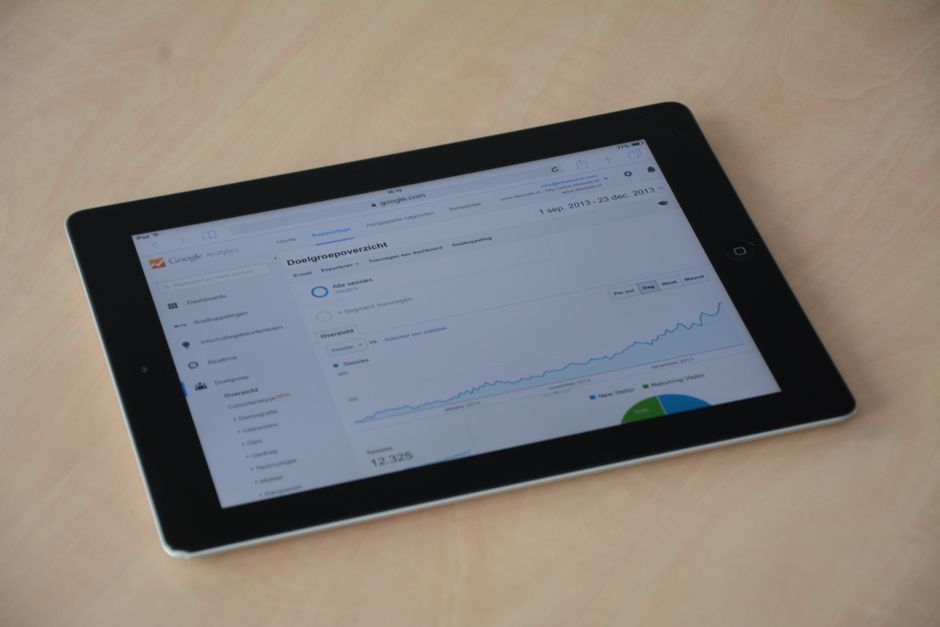
Three measurement groups matter. First, content velocity: how many publishable assets can be produced per month from existing conversational inputs. Second, organic performance: rankings, impressions, clicks, and CTR for transcript-derived topics. Third, operational quality: revision load, editorial time per article, and the share of drafts that need major restructuring after generation.
If the system is working, not every note will become an article, but more meetings will become reusable source material. Over time, this reduces dependence on blank-page ideation and increases the share of content built from actual market conversations. We think that shift is one of the clearest practical wins of ai to take notes workflows.
Another strategic measure is source reuse depth. A single meeting may generate a recap, a blog outline, a short FAQ asset, a sales enablement note, and several internal-link targets. That is a much higher-leverage model than treating ai meeting minutes as archive material.
Privacy and compliance: consent, PII, and retention
AI notes workflows create real governance concerns. A transcript can contain customer names, emails, deal values, roadmap details, internal strategy, and regulated data. Before using any ai to take notes or ai to take meeting minutes in a content pipeline, teams need explicit rules for consent, retention, redaction, and publication boundaries.
Start with meeting consent. Participants should know when transcription or note generation is active. Then define source-handling rules: where transcripts are stored, who can access them, how long they are retained, and whether they can be exported into downstream systems. Tool defaults are not a compliance policy.
Retention and feature limits differ by vendor. Google’s documentation notes single-language support for note generation during a meeting, while Microsoft documents retention windows for transcripts and recaps. OpenAI documents supported upload types and file size limits. These details are operational, but they also shape policy because they affect what data can be processed, how, and for how long.
PII redaction should happen before editorial transformation if the source includes client or prospect details. Do not rely on the final draft stage to catch everything. Redact names, direct contact information, confidential account specifics, and anything that could identify a customer unnecessarily. If the value of the quote depends on who said it, get explicit approval before publishing.
| Privacy area | Main risk | Recommended control |
|---|---|---|
| Meeting capture | Participants unaware of recording or note generation | Clear consent and meeting policy disclosure |
| Transcript storage | Over-retention of sensitive text | Retention schedule and restricted access |
| Editorial reuse | PII or confidential detail leaking into content | Pre-draft redaction and quote approval workflow |
| Tool configuration | Assuming default settings match policy needs | Documented admin settings and periodic review |
The rule for B2B teams is straightforward: reusable source material is valuable, but only when governance is explicit from the start.
Downloadable checklist and prompt examples
A durable workflow depends on prompts and checklists that can be reused across teams. The checklist should begin before note generation and end only after publishing QA. Below is a compact version that can be turned into a template in your content system.
Checklist for turning ai notes into SEO content:
- Capture the right input: transcript, voice memo, recording, PDF, or mixed notes.
- Verify consent and remove or redact sensitive data before editorial processing.
- Normalize the source into speaker labels, topics, examples, quotes, and action items.
- Extract entities, repeated phrases, customer language, and keyword candidates.
- Select one primary article angle and define search intent.
- Generate H2/H3 structure based on reader logic, not meeting chronology.
- Draft from the cleaned source with explicit rules for tone, evidence, and keyword use.
- Add visuals, links, citations, and CMS formatting only after the structure is stable.
- Run final QA for accuracy, E-E-A-T, readability, and publication readiness.
Prompt example: transcript to outline
“Using the transcript below, create an SEO outline for a B2B audience. Identify the primary problem, recurring customer language, supporting entities, and likely keyword targets. Build a practical H2/H3 outline based on search intent, not on transcript order. Include likely FAQ questions and note any quotes or examples worth preserving.”
Prompt example: outline to draft
“Write a structured article draft for marketers and business owners using the outline and cleaned notes below. Keep the tone strict and practical. Use the source material as grounding, preserve key terminology, avoid unsupported claims, and make each section useful without repeating the transcript.”
Prompt example: notes to content brief
“Convert these ai meeting notes into a content brief with focus keyword, secondary keyword groupings, search intent, article angle, H2/H3 structure, evidence bank, internal-link ideas, and publishing cautions based on any sensitive or unverifiable details in the notes.”
Once these prompts are standardized, the workflow becomes much easier to scale across weekly meetings, founder voice memos, sales recaps, and customer interviews. If your team also tests an ai notes taker or an ai notes taker free setup before moving to a fuller stack, keep the same editorial logic across both. The tool can change. The process should not.
We think the core lesson is simple: ai notes are most valuable when they sit inside a real editorial system, not as a standalone summary layer. Teams that normalize inputs, extract search signals, and draft from evidence will usually outperform teams that treat ai notetaking as a shortcut. The upside is not just speed. It is better source fidelity, stronger topical coverage, and a more repeatable path from conversation to rankings.
Our forecast is pragmatic. More companies will adopt notetaking ai and notetaker ai workflows over the next year, but the competitive edge will come from what happens after capture. The winners will be teams that connect ai notes from pdf, ai notes from video, and live transcripts to a governed SEO pipeline. Everyone else will just produce more summaries.
FAQ
How do I turn meeting notes into a blog post with AI?
Start by cleaning the source, not by drafting right away. Normalize the transcript or ai meeting notes into speakers, topics, quotes, action items, and repeated phrases, then extract keyword candidates and build an SEO outline before generating the article.
What is the best AI notetaker for marketing meetings?
The best ai notetaker depends on what happens after the meeting. If you only need recap and action items, many tools can work. If you need a system that turns raw notes into outlines, drafts, internal links, and WordPress-ready content, the workflow layer matters more than note capture alone.
Can AI summarize Zoom recordings and keep action items?
Yes. Many tools can summarize recorded meetings and preserve action items if transcription is enabled and the source audio is usable. For SEO teams, the key is keeping access to the underlying transcript so those summaries can later become content briefs and article sections.
How do I keep customer data private when using AI notes?
Redact PII before editorial processing, define explicit consent rules, and control retention and access by policy rather than default tool settings. Do not let raw ai notes with customer identifiers flow into drafting or publishing without a documented review step.